
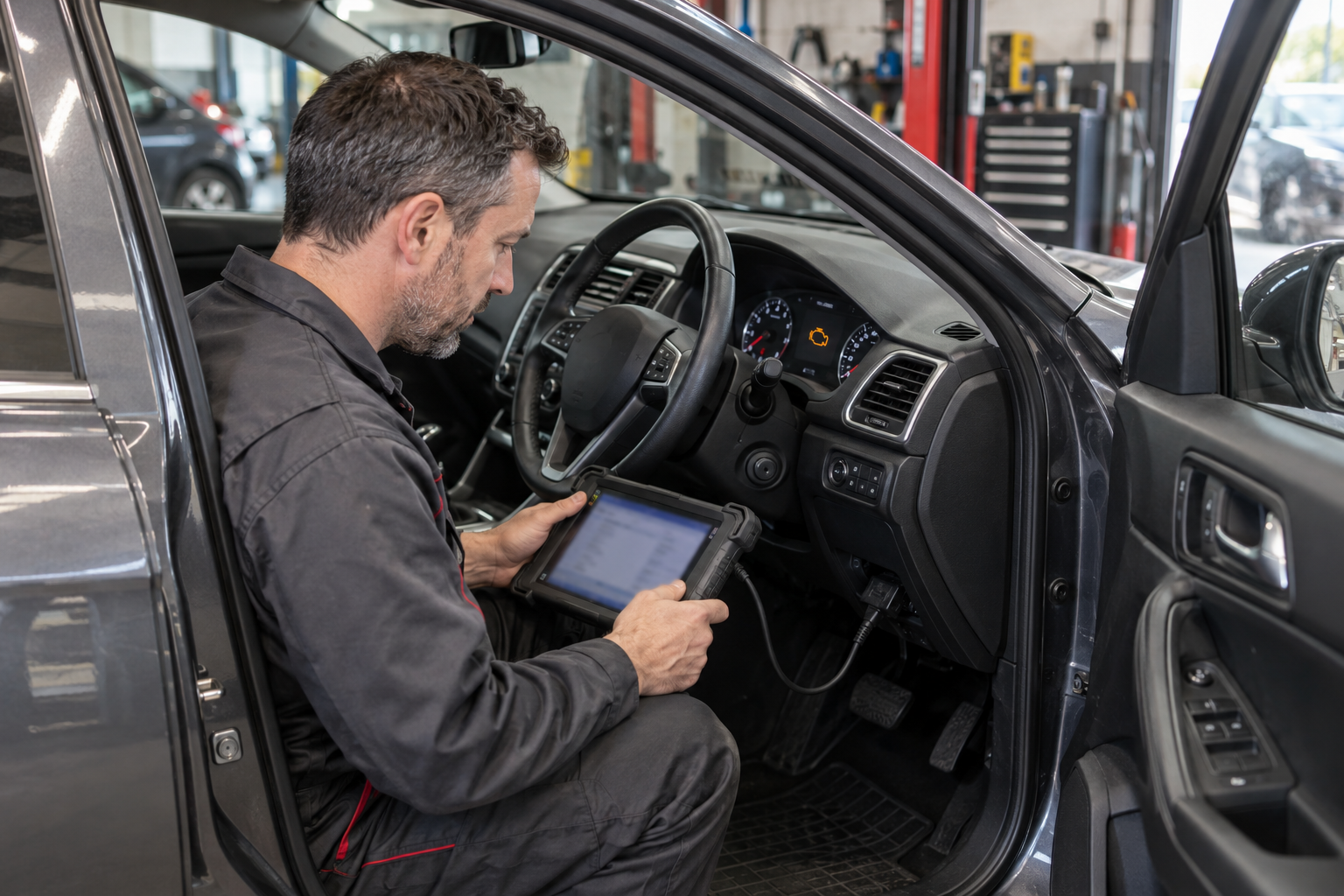
Modern vehicles constantly monitor systems including the engine, brakes, battery, airbags, tyres and emissions equipment. When the car detects something unusual, it uses a dashboard symbol to alert the driver.
Some lights simply confirm that a feature is operating. Others indicate that the vehicle should be inspected, while certain warnings mean you should stop driving as soon as it is safe.
Warning symbols and recommended actions vary between manufacturers, so your vehicle handbook should always be treated as the definitive guide.
What do the warning-light colours mean?
Although designs vary, dashboard lights generally follow a familiar colour system.
Red warning lights
A red warning usually indicates a potentially serious problem or something requiring immediate attention. Depending on the symbol, you may need to stop the vehicle safely and switch off the engine.
Examples include warnings relating to engine oil pressure, overheating, the braking system or the vehicle’s electrical charging system.
Amber or yellow warning lights
An amber light normally indicates that the vehicle has detected a fault that needs to be investigated. The car may still be driveable, but the problem should not be ignored.
The check-engine light, ABS warning, tyre-pressure warning and emissions-related alerts commonly use amber.
Green, blue or white lights
These colours generally provide information or confirm that a system is operating. Examples include headlights, cruise control and direction indicators.
They usually do not indicate a fault, although unfamiliar symbols should still be checked in the owner’s manual.
Check-engine warning light
The check-engine light can appear for many reasons, ranging from a sensor or emissions-system fault to a problem affecting combustion or engine performance.
A steady amber light often means that the vehicle should be inspected soon. If the light flashes, the engine runs roughly or there is a noticeable loss of power, treat the situation as more urgent and avoid continuing the journey unnecessarily.
The symbol alone does not identify the failed component. A diagnostic scan can retrieve stored fault codes, but those codes still need to be interpreted alongside live vehicle data and physical inspections.
Engine oil-pressure warning
The red oil-can symbol may indicate that the engine is not maintaining sufficient oil pressure.
Low oil pressure can quickly cause severe engine damage. Stop somewhere safe, switch off the engine and check the vehicle handbook before taking further action. Do not continue driving simply because the engine still appears to be running normally.
This warning is different from a routine oil-service reminder. One concerns engine protection; the other tells you that scheduled maintenance is due.
Coolant-temperature warning
A red temperature symbol or temperature gauge in the danger zone can indicate that the engine is overheating.
Stop safely and switch off the engine. Allow it to cool before arranging assistance or performing any checks. Never remove the coolant reservoir or radiator cap while the engine is hot, as the cooling system may be pressurised.
Continuing to drive an overheating vehicle can result in serious engine damage.
Battery or charging-system warning
The battery symbol usually relates to the charging system rather than simply indicating an old battery. Possible causes include the alternator, wiring, connections or the drive belt.
If the charging system is not working, the vehicle may continue running briefly using the remaining battery power, but it can eventually lose electrical systems and stop.
Reduce unnecessary electrical use and arrange an inspection promptly. If other warning lights appear or the vehicle begins behaving unusually, stop safely.
Brake-system warning
The brake warning light may appear when the handbrake is engaged. If it remains illuminated after the handbrake has been released, it could indicate low brake fluid or another fault within the braking system.
Do not ignore changes in braking performance, a soft brake pedal or unusual noises. Stop driving and seek professional assistance if the brakes do not feel normal.
ABS warning
An amber ABS light indicates a problem with the anti-lock braking system.
The vehicle’s standard braking system may continue to operate, but the anti-lock function may be unavailable. This can affect the vehicle’s behaviour during heavy braking or on slippery roads.
Drive cautiously and arrange a diagnostic inspection as soon as possible.
Tyre-pressure warning
The tyre-pressure monitoring system uses a symbol resembling a tyre with an exclamation mark.
It may indicate that one or more tyres are underinflated, although a sensor fault is also possible. Check the tyres for visible damage and measure their pressures when safe to do so. Inflate them according to the vehicle manufacturer’s specifications.
If the warning returns after the pressures have been corrected, the system may require further investigation.
Airbag warning
An illuminated airbag or supplementary restraint-system light indicates that a fault has been detected in part of the safety system.
The airbags or seatbelt pretensioners may not operate correctly during a collision. The vehicle should therefore be professionally inspected rather than waiting until its next routine service.
Diesel particulate filter warning
Diesel vehicles may display a warning when soot has accumulated in the diesel particulate filter.
The correct response depends on the vehicle. Some manufacturers may recommend a particular driving procedure, while other situations require professional cleaning or repair. Follow the handbook rather than attempting a generic solution that may be unsuitable for your car.
Ignoring the warning can eventually lead to restricted performance and more expensive repairs.
Why reading the fault code is only the beginning
A diagnostic fault code does not always identify the exact component that needs replacing. It indicates the system or operating condition in which the fault was detected.
For example, a sensor-related code might be caused by the sensor itself, damaged wiring, an air leak or another component producing an unexpected reading.
Proper diagnosis can include:
- Reading stored and pending fault codes
- Examining live data from vehicle sensors
- Checking wiring, connections and fluid levels
- Testing individual components
- Looking for mechanical faults or leaks
- Comparing the results with manufacturer specifications
Replacing parts based solely on a code can waste money without resolving the original problem.
What should you do when a warning light appears?
When an unfamiliar warning appears:
- Remain calm and pay attention to how the vehicle is behaving.
- Stop safely if the light is red, flashing or accompanied by unusual noises, smoke, overheating or reduced braking.
- Check the owner’s manual for the precise meaning and recommended response.
- Note when the light appeared and whether any other symptoms occurred.
- Arrange a professional inspection if the cause is unclear.
- Do not erase fault codes or disconnect the battery before diagnosis, as this may remove useful information.
The Road Safety Authority includes dashboard warning lights among the basic vehicle checks drivers should understand between regular services. It also reminds motorists that they are responsible for keeping their vehicles safe and roadworthy throughout the year. Read the RSA’s vehicle-maintenance guidance.
At AutoSales Workshop in Sandyford, we use professional diagnostic equipment to investigate warning lights and vehicle faults across all makes and models. If a warning light has appeared, contact our team before a small fault has the opportunity to become a considerably larger one.